Mastering Color-Changing Gem Photography: How to Capture Alexandrite and Beyond
31 Mar 2026
0 Comments

Capturing the true beauty of a color-changing gemstone is both an art and a science. Gems like alexandrite, color-changing sapphire, and garnet are renowned for their mesmerizing hue shifts under varying lighting, making them a favorite for collectors, gem dealers, and jewelry brands. Whether you’re a jewelry photographer, gemstone dealer, or online jewelry seller, this quick 3‑minute guide will walk you through how to achieve stunning, true-to-color images — even with minimal gear.
Understanding Color-Changing Gemstones
Color-changing gemstones reveal different shades depending on the lighting conditions, typically shifting between cooler daylight tones and warmer indoor hues. Common examples include alexandrite, color-changing sapphire, garnet, and certain spinel varieties that can show striking or subtle transitions. Their unique optical behavior makes them highly desirable, but also notoriously tricky to photograph accurately without controlled lighting and a thoughtful setup.
Understanding Color-Changing Gemstones
Color-changing gemstones reveal different shades depending on the lighting conditions, typically shifting between cooler daylight tones and warmer indoor hues. Common examples include alexandrite, color-changing sapphire, garnet, and certain spinel varieties that can show striking or subtle transitions. Their unique optical behavior makes them highly desirable, but also notoriously tricky to photograph accurately without controlled lighting and a thoughtful setup.


Choosing the Right Lighting Equipment
For the most consistent results, a gem light box gives you a controlled environment for both background and lighting. These boxes often let you switch between warm light (around 3200K) and white daylight (around 5600K) so you can reliably capture the stone’s full color-change range. This is ideal for gemstone photography studios, professional jewelers, and high-volume online listings.
If you are just starting out or working outside a studio, a portable bi-color LED light like the Ulanzi 3200K–5600K panel is a great alternative. It offers adjustable color temperature and compact size, making it easy to simulate different lighting conditions and bring out the gem’s color-change effect without investing in a full light box setup.
For the most consistent results, a gem light box gives you a controlled environment for both background and lighting. These boxes often let you switch between warm light (around 3200K) and white daylight (around 5600K) so you can reliably capture the stone’s full color-change range. This is ideal for gemstone photography studios, professional jewelers, and high-volume online listings.
If you are just starting out or working outside a studio, a portable bi-color LED light like the Ulanzi 3200K–5600K panel is a great alternative. It offers adjustable color temperature and compact size, making it easy to simulate different lighting conditions and bring out the gem’s color-change effect without investing in a full light box setup.


Simple Setup Guide for Everyday Use
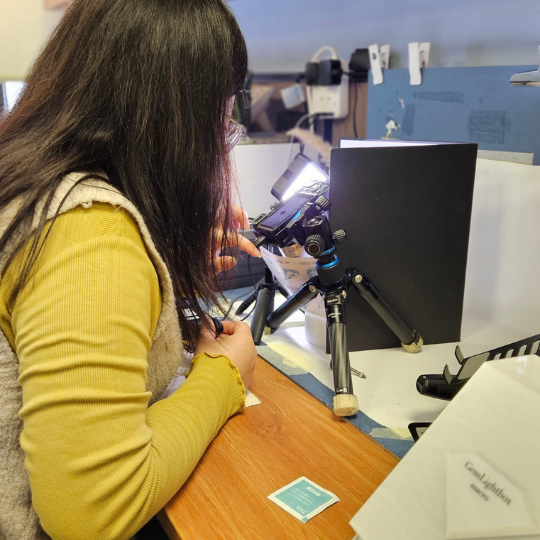
You can still achieve professional-looking gemstone photos with a minimal, budget-friendly setup by following these steps:
Choose a dim space. Work in a room away from windows and turn off overhead lights to avoid mixed color temperatures, which can distort gemstone color.
Set your background. Use a double-sided A3 stand (white on one side, black on the other), or simply prepare white and black paper from a stationery shop to test contrast.
Test background contrast. Place the gemstone on each background and review which one makes the color and clarity stand out more. Many stones look better on white, but darker backgrounds can help with very light gems.
Adjust your Ulanzi light. Start at 3200K (warm light) and slowly shift toward 5600K (white light), watching how the stone’s color changes through the different settings.
Use a phone stand or tripod. A basic stand with adjustable height and angle keeps your camera or phone stable and aligned with the gem, reducing blur and ensuring consistent framing.
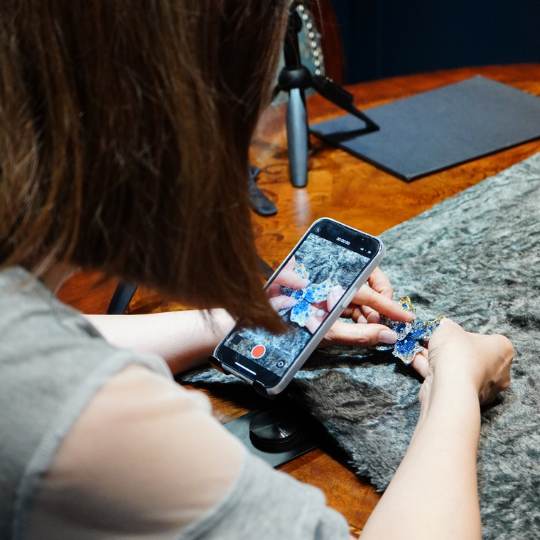
Lock focus and tweak brightness. Tap to lock focus on the gemstone, then slide your exposure or brightness slightly down if the stone looks overexposed or washed out under the light.
This approach lets you capture the gemstone’s true color-change story while keeping your workflow simple and repeatable.
You can still achieve professional-looking gemstone photos with a minimal, budget-friendly setup by following these steps:
Choose a dim space. Work in a room away from windows and turn off overhead lights to avoid mixed color temperatures, which can distort gemstone color.
Set your background. Use a double-sided A3 stand (white on one side, black on the other), or simply prepare white and black paper from a stationery shop to test contrast.
Test background contrast. Place the gemstone on each background and review which one makes the color and clarity stand out more. Many stones look better on white, but darker backgrounds can help with very light gems.
Adjust your Ulanzi light. Start at 3200K (warm light) and slowly shift toward 5600K (white light), watching how the stone’s color changes through the different settings.
Use a phone stand or tripod. A basic stand with adjustable height and angle keeps your camera or phone stable and aligned with the gem, reducing blur and ensuring consistent framing.
Lock focus and tweak brightness. Tap to lock focus on the gemstone, then slide your exposure or brightness slightly down if the stone looks overexposed or washed out under the light.
This approach lets you capture the gemstone’s true color-change story while keeping your workflow simple and repeatable.


Final Thoughts
Shooting color-changing stones like alexandrite doesn’t require a full professional studio — it requires controlled light, a clean background, and a steady setup. With a gem light box or a portable Ulanzi bi-color LED light, you can reveal every shade and nuance of your gemstone and present it accurately for online listings, social media, or client catalogs.
If you’re a jewelry brand, gemstone dealer, or content creator, mastering color-changing gem photography will help your pieces stand out in a crowded digital marketplace and build trust through honest, high-quality visuals.
Shooting color-changing stones like alexandrite doesn’t require a full professional studio — it requires controlled light, a clean background, and a steady setup. With a gem light box or a portable Ulanzi bi-color LED light, you can reveal every shade and nuance of your gemstone and present it accurately for online listings, social media, or client catalogs.
If you’re a jewelry brand, gemstone dealer, or content creator, mastering color-changing gem photography will help your pieces stand out in a crowded digital marketplace and build trust through honest, high-quality visuals.